News
2026 Maryland Consumer Protections Legislative Review
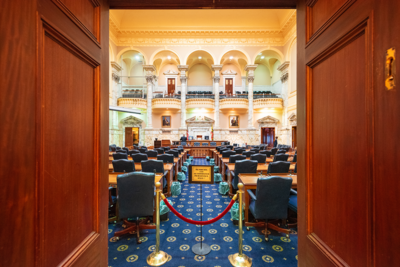
The sky was overcast and gloomy which mirrored the feelings of many economic justice advocates yesterday on Sine Die, the last day of Maryland’s 90 day legislative session.
In January, Senate President Bill Ferguson and House Speaker Joseline Peña-Melnyk opened the legislative session promising to focus on affordability.
 Affordability is top of mind for most Marylanders. Our survey of more than 500 Marylanders as well as our tenant and older adult clients, found that 80% said that increase in cost of living has had an impact on their lives with more than 50% cutting back on spending, and nearly 28% having trouble affording basic necessities.
Unfortunately, for Marylanders struggling to make ends meet, there was little meaningful action on pocketbook issues this legislative session. Legislators made incremental progress on housing, energy, and consumer protection issues at a time that called for monumental changes to make housing and credit more affordable, limit evictions, and reduce energy bills.
The 2026 legislative session is over, but the fight to advance consumer protections continues.
Overall, Economic Action’s policy team weighed in on 141 bills and testified in person on 60 bills. The results are below.
The Good
Often on Sine Die, Economic Action is proud to share the passage of legislation that places us in the top five states in the country (often first or second) in strengthening consumer protections and expanding economic justice on student and medical debt, debtor protections, and energy reform. This year, there were no bills that made great strides in protecting financially fragile Marylanders from corporate overreach and high costs. However, several good bills passed that help households with critical affordability issues.
Housing
- SB274/HB573: Strengthens fair housing law in Maryland by codifying disparate impact. As the Housing and Urban Development (HUD) loses funding and fair housing staff, this legislation allows Maryland to use disparate impact when considering fair housing violations which was in place under the Biden Administration and rolled back under the Trump Administration.
- SB 939/HB1098: This legislation raises the amount of home equity a homeowner can protect in bankruptcy from $6,000 to $125,000. Currently Maryland receives an “F” from the National Consumer Law Center because $6000 is 1% of median home value in the state. This legislation will protect the 12,221 households that file bankruptcy this year and are homeowners.
Affordable Credit
- SB94/HB237: Prohibits payday loan apps from charging hidden fees and abusive interest. Maryland had prohibited payday lending in Maryland for more than four decades. Last year, Maryland passed legislation to allow payday loan apps in Maryland. SB94/HB237 establishes new protections for 100,000 Maryland borrowers including banning tips on loans and ensuring that these loans abide by federal anti-discrimination laws.
- SB582: Prohibits unsolicited checks for loans and home purchase offers received, unsolicited, by Marylanders. This legislation will protect Marylanders who receive live checks, which are actually high-cost loans and deceive individuals into cashing these checks and activating the loan or home purchase.
Good First Step
This session, highly paid lobbyists representing Wall Street, developers, bankers, and private equity were successful in weakening a number of bills that addressed affordability and tenant protections. Despite their efforts to weaken legislation, the bills that are moving forward represent good first steps to address auto insurance, grocery store prices, and housing.
Affordability
- SB387/HB895: Nearly 73% of Marylanders surveyed said groceries were one of their most unaffordable expenses. Prohibits grocery stores from using surveillance pricing to overcharge consumers for everyday necessities. This legislation is the first in the nation to address the use of personal data to establish different prices for individuals for the same bag of groceries. The legislation is groundbreaking, but as amended, only prohibits the use of personal data to increase prices, rather than to set prices which narrows the impact of the bill. Despite the narrowing of the bill, it remains a good first step in reining in the use of algorithms and dark patterns to set individual prices based on personal data. Implementation and enforcement will be critical to the success of this effort.
- SB865: Workgroup on the Affordability of Private Passenger Automobile Insurance – Extension and Alteration of Membership and Duties. This legislation extends the workgroup on auto insurance affordability but expands the workgroup to include more consumer advocates and directs the workgroup to propose legislation in 2027 to create a low-cost auto insurance program in Maryland and to address the use of zipcodes in setting auto insurance rates. We look forward to supporting strong consumer protection legislation that emerges from the workgroup in 2027. The Federal Insurance Office (FIO) found 10 zip codes in majority Black Maryland neighborhoods pay unaffordable auto insurance rates affecting 334,269 or 12.4% of population. In the past five years, Maryland drivers have experienced exorbitant price hikes. Maryland’s rate hike of 29% in 2022 was one of the highest rate hikes in the nation.
Housing
- SB335/HB315; Strengthens laws to protect renters from source of income discrimination. This will clarify how landlords can calculate income for renters using housing vouchers to curb wrongful denials and expand access to affordable apartments for tenants.
- SB937/HB1073: Gives renters with a record a fair chance to secure housing. The bill restricts a landlord from using certain criminal history records to determine a prospective tenant, requires data collection, and makes violation of these provisions a civil penalty.
Energy
- SB841/HB1532: Advances a suite of reforms to tackle rising energy prices and expand energy assistance programs. The final bill includes 20 individual pieces of legislation and is the result of significant debate and compromise. We will share additional analysis as we work through the final language, which was approved on Sine Die. The legislation includes three key elements that Economic Action supported:
- HB1/SB2: Prevent utility companies from profiteering off of ratepayers. This bans utilities from passing on the bulk of CEO and C-Suite salaries onto ratepayer bills.
- SB596/HB940: Make data centers – not households – pay for their massive energy use.
- SB843/HB1195: Expand programs to bring affordable solar power to energy-burdened homes.
Good Riddance
Corporate lobbyists pushed several bills this session based on the premise that they were above the laws that all other businesses must comply with. Corporations and wealthy hospitals wanted to codify their beliefs that the laws don’t apply to them, or that they do not have to be held accountable for breaking the law.
- AMENDED SB890/HB1228: Creates a study on whether to exempt nonprofit hospitals from paying the taxes they have failed to pay as required by law, costing the state millions. The original bill would have exempted Maryland nonprofit hospitals from paying these taxes going forward, and forgiven the estimated $20-$25 million that they owe to the state of Maryland, which would be revenue for our budget.
- DEFEATED SB383/HB28: Would allow private career schools to advertise before they have received state certification.
- DEFEATED SB589/HB433: As amended, would put on hold several legal actions currently pending against property management companies over abusive rent collection practices. As drafted, the bill would have wiped out oversight, investigation, and enforcement of property management companies by the state of Maryland.
Bring Back Next Year
The House and Senate spent a great deal of time debating the budget, the final energy package, and critically important protections for immigrant communities, which meant that a number of vital affordability measures ran out of time and did not pass.
- HB434, HB1475: Ban landlords from using AI to secretly collude on prices for rent.
- HB1198; HB1471: Protect victims of coerced debt and identity theft from unjust court procedures.
- HB1456: Protect tenants and landlords from pervasive online rental scams.
- SB180/HB213: Carve out an exception for fair housing testers to use audio recordings to test for discrimination.
- SB353/HB523: Provide clarity to homeowners facing foreclosure and end zombie mortgage foreclosures.
- SB796/HB1124: Increase transparency for patients and pet owners around high-cost medical credit cards.
Economic Action’s small but savvy policy team was instrumental in passing legislation that will protect payday loan borrowers, homeowners facing bankruptcy, and the use of personal data to increase grocery prices. We made incremental progress in other areas and stopped bills that prized corporate welfare and profits above people as well.
But there are far more corporate lobbyists with more money to spend than our small organization. Your emails, calls, and social media shares helped us win the victories for households that are working to just make ends meet!